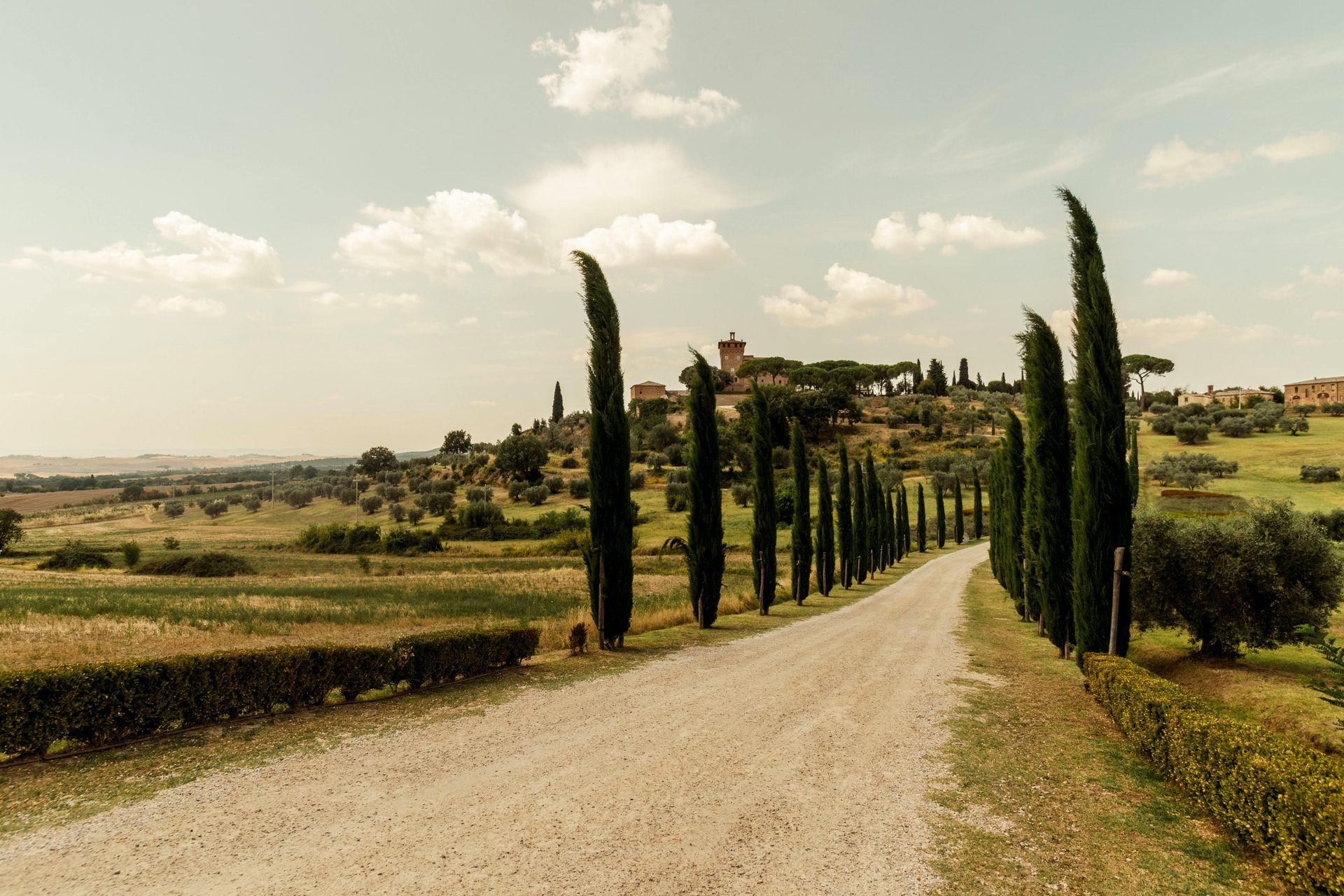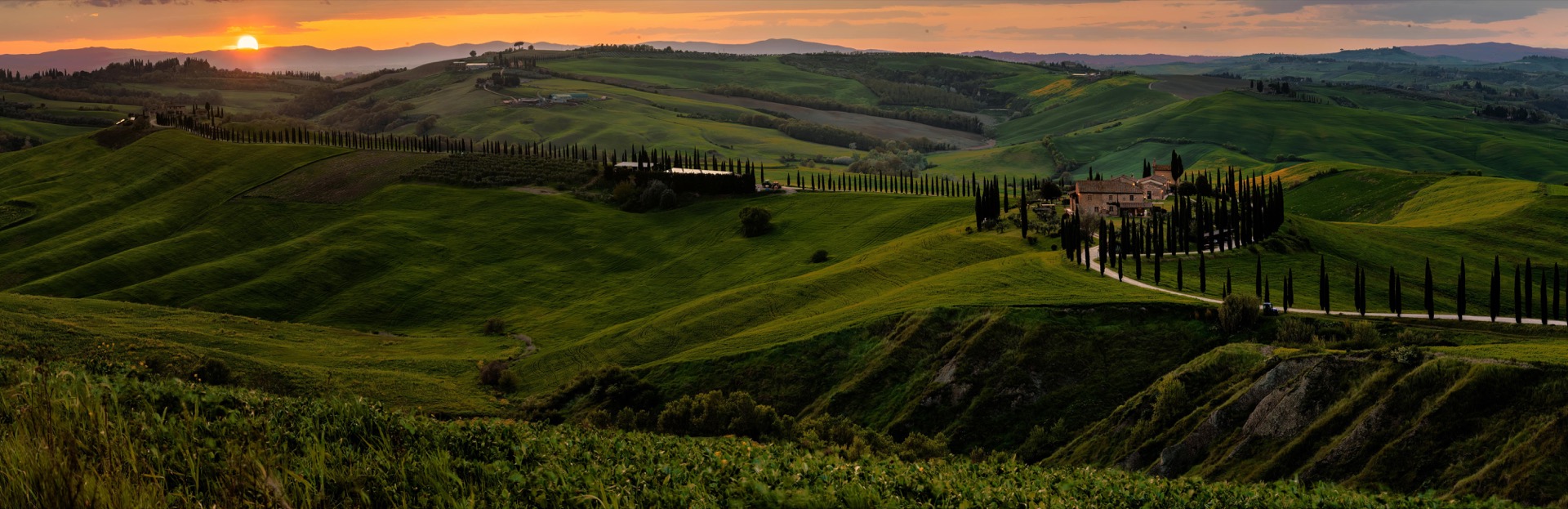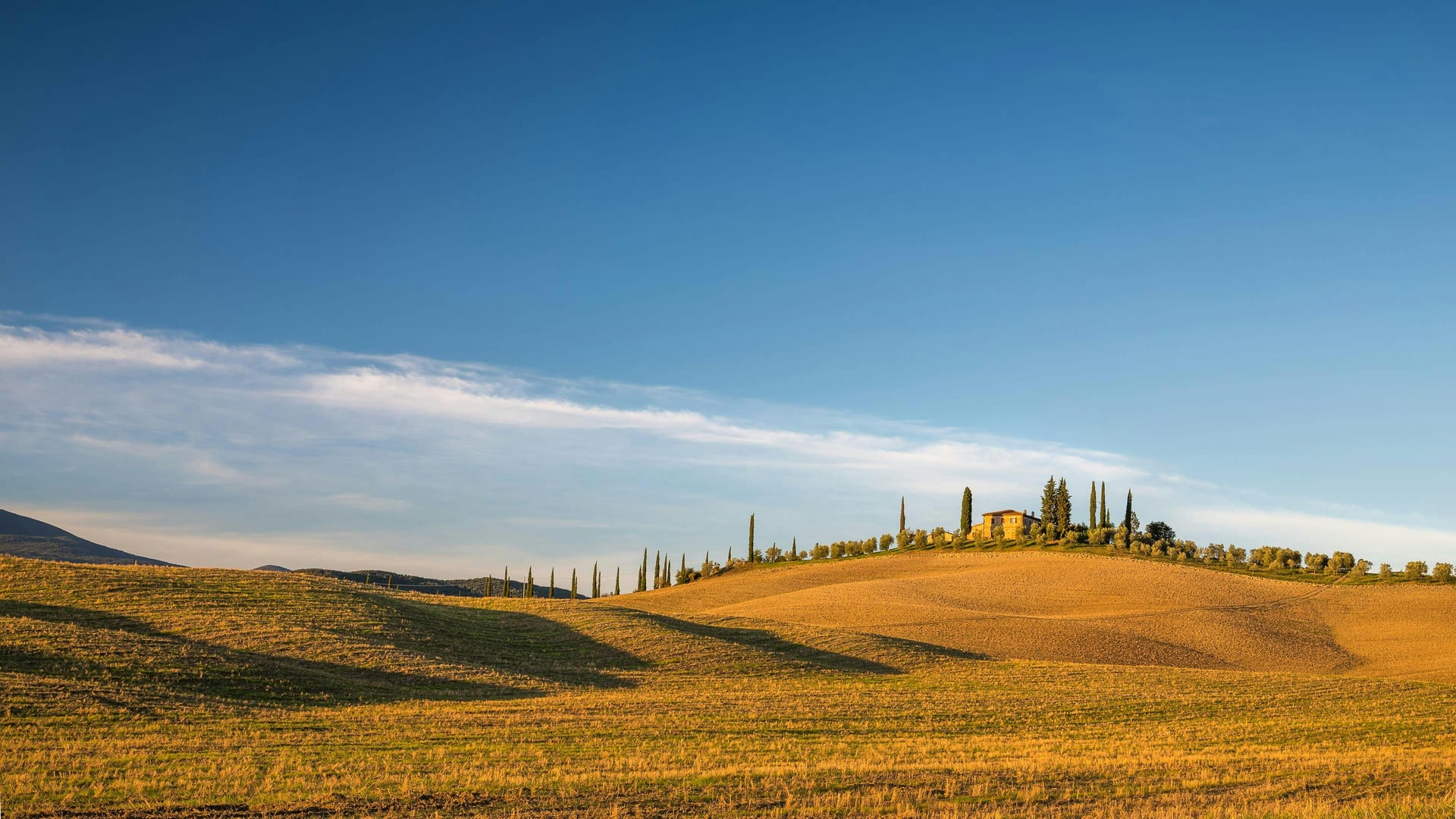
A casale is rarely a simple purchase: its history is written in records that must match the physical building, and its renovation tends to cost more than the listing photographs suggest. Stone walls half a metre thick, terracotta floors, an olive grove that came with the land — the character is real, and so is the complexity behind it.
What Is a Casale?
A casale is a rural stone farmhouse, traditionally built with the ground floor for animals, storage, or an olive press, and the family living above. The walls are load-bearing natural stone, 50 to 80 cm thick, in whatever the area gave: pale Pietra Serena and Alberese in Chianti, tufa in the Maremma, sandstone in the Garfagnana. Living space usually runs 200 to 500 m² over two floors, almost always with at least one outbuilding and land from a couple of thousand square metres up to several hectares.
Three features define the type and follow you into ownership. The thick walls keep the house cool in summer but cannot be insulated from the outside without compromising the facade, so insulation has to be handled from within. The position is isolated by design, often a hillside reached by a dirt road, the nearest neighbour anywhere from 500 metres to a few kilometres. The land is part of the purchase: an olive grove, a garden, sometimes woodland, each carrying upkeep that buyers from cities consistently underestimate, from the access road to the trees to where the water comes from.
Casale, Villa, or Podere
Listings blur these three words, and the difference decides price, legal status, and how much you are taking on. A casale is a former farmhouse in residential use, one main building and perhaps an outbuilding, with modest grounds and no agricultural business attached. A villa was purpose-built as a residence, usually grander, often heritage-listed, with larger floor plans and higher prices per square metre. A podere is an agricultural estate: substantial farmland, machinery, licences, sometimes staff, and buying one means buying a business rather than a home.
The line between casale and podere is the one that catches buyers. A casale with three hectares of olive trees may be advertised as a podere though it runs no farm, and a working estate may appear as a simple country house. What settles it is not the listing but how the property is classified in the official records and how it is actually used, and that is one of the first things confirmed before an offer.
Prices by Condition
Casale prices turn on three things: condition, region, and how you reach the house. A casale on a paved road in Chianti costs several times per square metre what a comparable building costs at the end of a dirt track in the Garfagnana. Condition is the largest lever, because the purchase price is often the smaller half of what you will spend.
| Condition | Price | Per m² | Notes |
|---|---|---|---|
| Unrenovated | €200,000 – €500,000 | €600 – €1,500 | Shell sound, everything else to replace; rarely on the big portals |
| Partially renovated | €400,000 – €900,000 | €1,500 – €2,500 | Liveable, dated; the largest segment of the market |
| Fully restored, with pool | €600,000 – €1,800,000 | €2,500 – €5,000 | Above €1M for 350 m²+ in Chianti and Val d’Orcia |
An unrenovated 300 m² casale bought at €250,000 typically reaches €700,000 to €1.1 million once it is fully restored. The headline price is the start of the budget, not the end of it.
Renovation Costs
Renovation in Tuscany follows fairly steady ranges, quoted here per square metre of living space, covering materials, labour, and management but not the pool, garden, or any outbuilding.
| Scope | Cost/m² | Timeline |
|---|---|---|
| Light: kitchen, baths, wiring, heating; walls and roof stay | €800 – €1,500 | 6 – 10 months |
| Full: down to the stone shell, new roof, insulation, services | €1,500 – €2,500 | 12 – 18 months |
| High-end: premium finishes, quality stonework, system upgrades | €2,500 – €3,000 | 18 – 24 months |
A full renovation is the usual scope for an unrenovated house. A pool adds €60,000 to €150,000, more where rock has to be cut. Converting an outbuilding into a guest suite is a separate planning question, and whether it is even permitted depends on the property’s classification and any landscape-protection constraints. Expect surprises in the walls and under the floors, because a building that has stood for two centuries has material conditions that surface only once work begins; a contingency of fifteen per cent on the renovation estimate is prudent rather than pessimistic.
Permits and Heritage
Italian renovation work is permitted in tiers, from a simple notice for cosmetic work, through a filed declaration for internal changes that leave the building’s shape and exterior untouched, up to a full building permit for anything structural, any change in volume, or any alteration visible from outside. The full permit is the one an unrenovated casale usually needs, and it carries the longest lead time. Matching the work to the right tier is a job for your architect or surveyor, and starting under the wrong one is where avoidable complications begin.
Heritage status sits on top of all of this. Where the casale or its setting is protected, the heritage authority must approve any visible change, down to window frames, roof tiles, and external colours, and that review adds months. Whether a property is protected is established before the offer, because it sets the ceiling on everything you might want to do.
On energy work: the generous renovation tax credits of recent years have been cut back sharply, and the incentives that remain are deductions against Italian income tax, which a non-resident generally cannot claim. The sensible approach is to budget energy improvements at full cost and treat any relief as a bonus rather than a working assumption.
What Gets Checked Before You Offer
A casale carries a handful of questions that determine whether a purchase is clean, and each is answered before the offer, by people working for you rather than for the seller.
The first, and the one that catches the most buyers, is whether the building matches its own records. Italian law requires that the house as it stands corresponds to its official records; a notary will not complete a sale where it does not. The distinction is worth holding: the notary verifies which permits the building is registered under, while whether the physical building actually matches what was permitted is a separate check, one the seller resolves with a surveyor before completion. On an old farmhouse, an enclosed terrace or a moved wall done decades ago without updating the paperwork is common. It is usually fixable, with time and cost attached, which is exactly why it is found early and not at completion.
The second is unpermitted work, which is heavier than a paperwork gap because it means construction done with no permit at all. Smaller cases can often be regularised; a major addition in a protected zone sometimes cannot, and a surveyor establishes that from the permit history before you commit. The third is access: a casale is often reached over land that belongs to someone else, and a registered right of way is what separates a road you can rely on from a neighbour’s goodwill. The fourth is water, because many of these houses draw from a private well or spring, and the question is what it yields in August, not in winter.
The system is well built, and when these questions are worked through in the right order a casale is a sound purchase. They are simply the reasons it is bought with someone who knows where to look.
Where to Buy
Chianti Classico has the most casali and the most competition, with a renovated farmhouse from around €700,000 to €1 million. Val d’Orcia offers the same calibre of landscape with fewer properties and a strong April-to-October rental season, at prices a little below Chianti. The Maremma holds the largest stock of unrenovated houses at the lowest prices (€200,000 to €350,000), in exchange for more distance and fewer services nearby. The Garfagnana north of Lucca is cheaper still, suited to buyers who want isolation and are not counting on rental income, and the Valdichiana between Arezzo and Lake Trasimeno sits in the middle, with good motorway access and Umbria next door. For a working agricultural estate rather than a residential casale, buying a podere in Tuscany covers the legal status and tax differences that decide the purchase.
Frequently Asked Questions
How much does it cost to fully renovate a casale in Tuscany?
For a 300 m² casale bought unrenovated, a full renovation to a modern standard runs €450,000 to €750,000, plus €60,000 to €150,000 for a pool. Add the purchase price and the total typically lands between €700,000 and €1.3 million, depending on region and finish. Hold a contingency of around fifteen per cent on the renovation figure, because what the survey could not see behind plaster and under floors tends to surface once work begins. These are guide ranges; the real number comes from a condition assessment of the specific house.
How long does a full renovation take?
Construction itself runs twelve to eighteen months once permits are in hand. Getting those permits adds a few months, and a heritage-protected property adds a few more for the authority’s review. From purchase to moving in, an unrenovated casale realistically runs eighteen to thirty months. The way to compress that timeline is to start the permit and survey work early, in parallel with the purchase, rather than treating it as the next phase once you hold the keys.
Can I manage a renovation from abroad?
In theory yes; in practice, buyers who try to run a Tuscan site remotely tend to collect delays and cost overruns. The working solution is a project lead on the ground who speaks your language, lives nearby, and has standing relationships with local trades. That person is your eyes on the site and the difference between a budget that holds and one that drifts, and is worth lining up before the purchase rather than after.
Do I need an architect?
For anything beyond cosmetic work, a licensed professional must sign the application, and for a full renovation that means an architect for the design and permits, often alongside a surveyor for the records and site supervision. This is the person who keeps the work inside what was permitted, which is what protects the value of the property when you come to sell it.
Can I turn a casale into an agriturismo or B&B?
A casale in a residential category can be let to holidaymakers with the regional registration that short lets now require. A formal B&B or agriturismo is a bigger step, with a change of use, safety and accessibility standards, and municipal approval, and the agriturismo route in particular requires that you actually run an agricultural activity, well beyond a hospitality permit. For a farmhouse without real farmland, the guest-accommodation route is the realistic one, and which path a given property can take is worth confirming before you buy on the strength of rental plans.
Andrej Avi is a real estate agent in Tuscany who guides international buyers through the purchase and renovation of stone farmhouses and country homes. Request buying support · Current listings
Further reading: Buying a villa in Tuscany · The Tuscany property market in 2026 · Buying property in Italy: the complete guide
As of July 2026. General information, not legal or tax advice.