Due Diligence When Buying Property in Italy: What Gets Checked and What Doesn’t (2026)
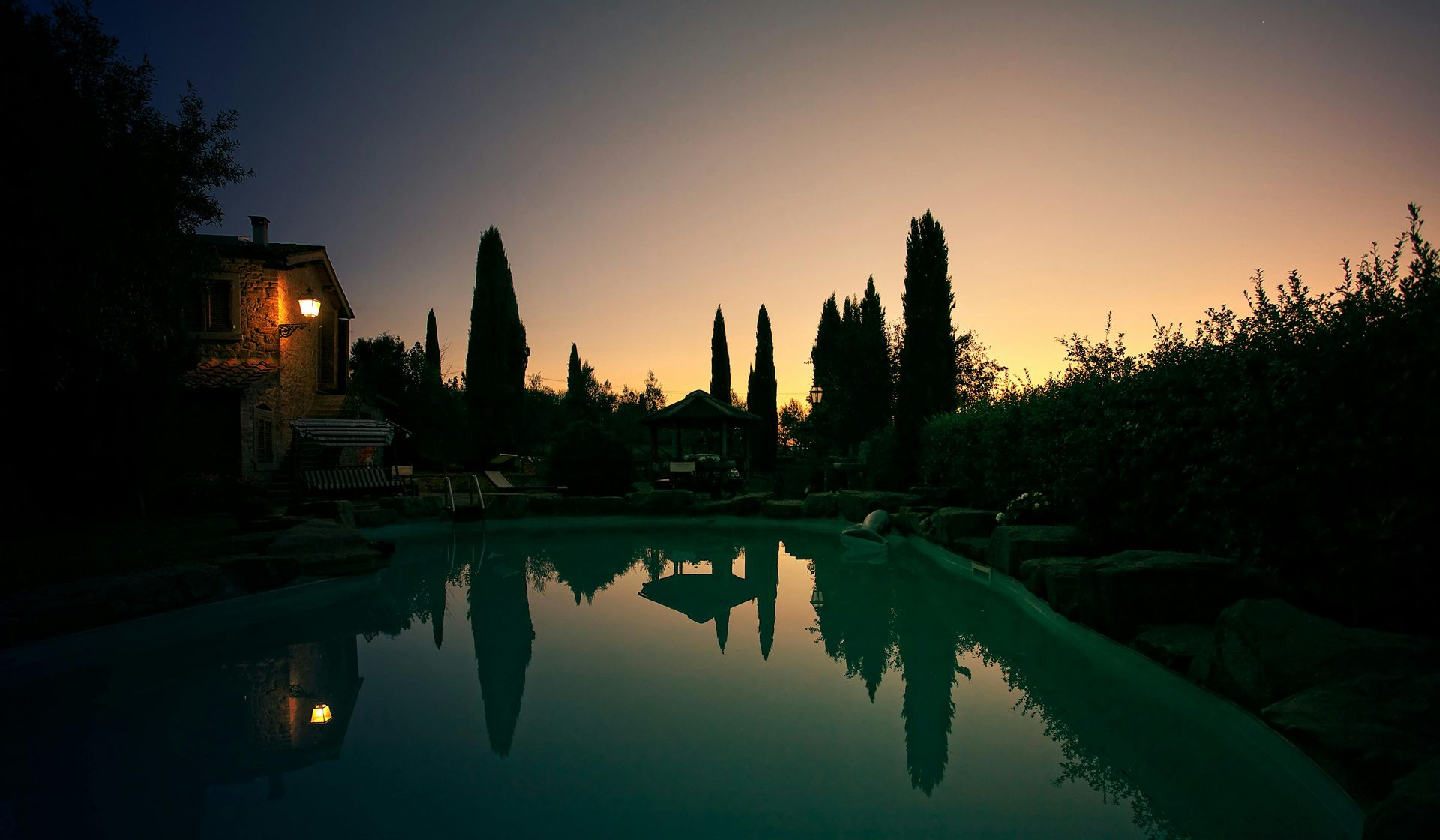
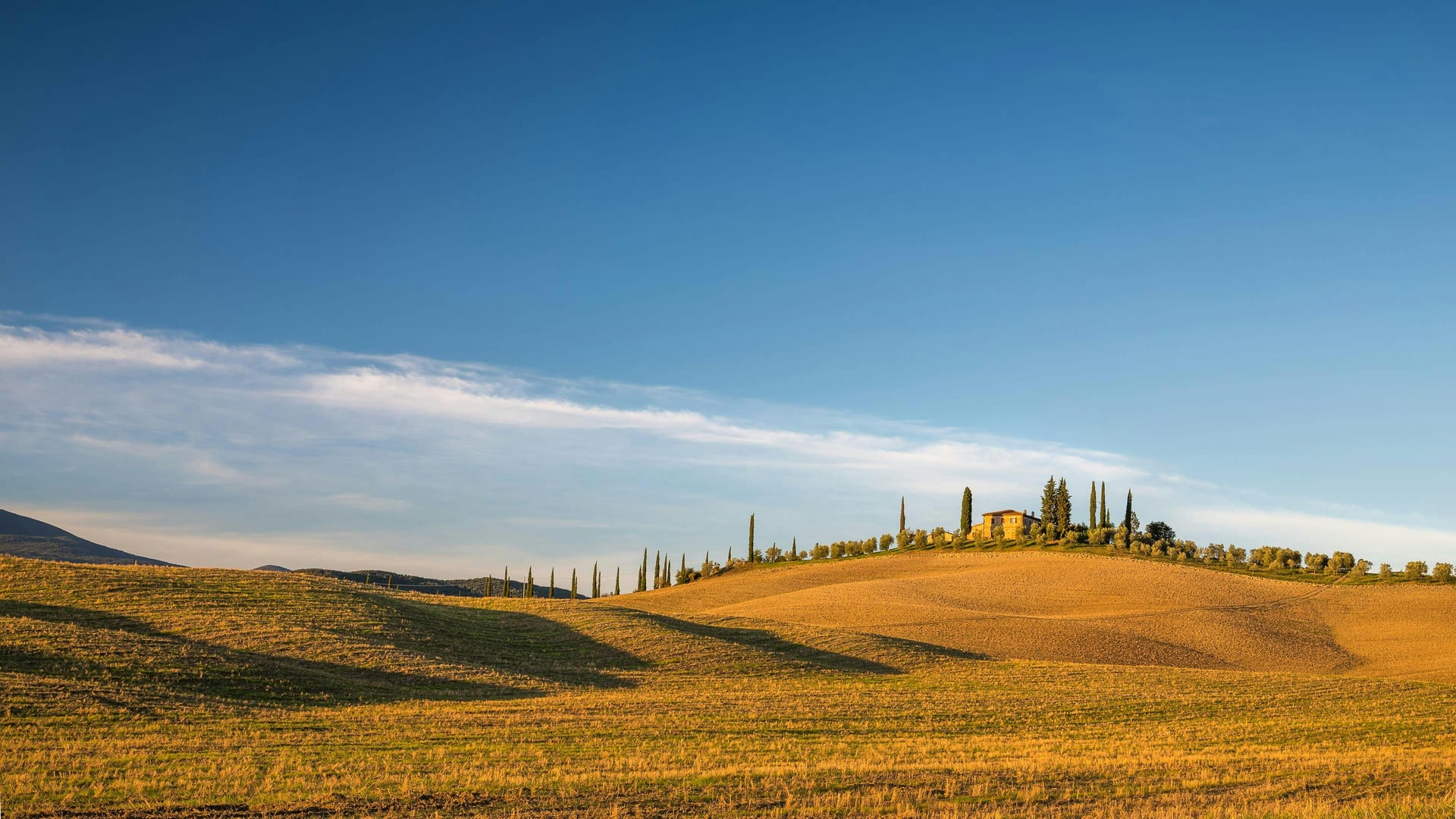
A couple from Zurich buys a farmhouse south of Siena. Stone walls, cypresses, a pool with views across the hills. After the notary appointment they want to renovate the pool and convert the old barn into a guest apartment. Then they find out: the pool has no building permit. The barn has no approved change of use. The retroactive permit for the pool costs 18,000 euros. The barn needs a building application that takes six months and costs 35,000 euros. If it gets approved at all.
The technical survey before the purchase would have cost 3,000 euros and caught both problems. That’s either a negotiation argument for the price or a reason to walk away.
This article covers what gets checked during due diligence in Italy, who checks what, what it costs, and where the most common problems appear in older buildings.
The short version
For anyone short on time:
- Technical due diligence costs 2,000 to 5,000 euros and takes 2 to 6 weeks.
- The notary checks the land registry, ownership chain, and cadastral plan. He does not check whether all renovations have building permits.
- Building permit compliance (conformita urbanistica) is the most common problem with country houses in Tuscany. Almost every older building has deviations.
- A retroactive permit (sanatoria) costs 10,000 to 50,000 euros depending on scale. A structure that can’t be permitted must be demolished.
- A suspensive clause in the purchase offer protects the buyer: if the survey finds problems, the buyer can withdraw without losing the deposit.
- Since the Salva Casa decree (2024), simplified procedures exist for minor deviations. This changes the risk profile of many older properties.
What the notary checks and what he doesn’t
This is where most foreign buyers get it wrong. In many European countries, the notary runs a thorough check. In Italy, the notary checks the legal framework. He does not check the building’s physical reality.
| Check | Notary | Your technician | Notes |
|---|---|---|---|
| Ownership chain (20 years) | Yes | --- | Visure ipotecarie, mortgages, liens, easements |
| Cadastral plan (conformita catastale) | Yes | --- | Plan must match reality, otherwise the deed is void |
| Anti-money laundering documentation | Yes | --- | Required under Italian AML law |
| Party identification | Yes | --- | Codice fiscale, marital property regime |
| Building permit compliance (conformita urbanistica) | No | Yes | Seller's responsibility under case law |
| Building permits for all renovations | No | Yes | Historical permits back to the first licence |
| Restrictions and constraints (vincoli) | Partially | Yes | Notary checks registry entries, not construction implications |
| Structural integrity | No | Yes | Only if needed, not standard |
| Change of use | No | Yes | Barn to living space requires cambio di destinazione d'uso |
| Energy certificate (APE) | Checks existence | --- | Preparation is the seller's responsibility |
The gap between what the notary checks and what actually needs checking is where buyers lose money. The rest of this article is about that gap.
More on the purchase process: Buying property in Italy: process, costs, and taxes.
Building permit compliance (conformita urbanistica)
The most common and most expensive problem with country houses in Tuscany.
Building permit compliance means: the property’s actual condition matches the building permits on file. Every room, every wall, every window, every extension must be covered by a permit. If this match doesn’t exist, the purchase contract is void under Italian case law.
A licensed surveyor (geometra) or architect compares the real condition against the historical building permits. In Tuscan farmhouses, deviations come up regularly: unpermitted extensions, repurposed barns, retrofitted apartments, enlarged windows, repositioned internal walls.
Closely related: the stato legittimo. This is the complete documentation of all building permits for a property, in chronological order from the first licence to today. Without this record, nobody knows whether the building in its current form is legal. For buildings constructed before 1967, a special rule applies: structures built before 1 September 1967 can be legally valid without a building permit (the ante-67 clause). This applies to many farmhouses in Tuscany.
The building permit hierarchy
| Permit type | Used for |
|---|---|
| Permesso di costruire (PdC) | New construction, major renovations |
| SCIA | Medium-scale renovations |
| CILA | Minor works without structural changes |
| Edilizia libera | No permit required |
Historical terms: licenza edilizia (before 1977), concessione edilizia (1977 to 2001). The technician must reconstruct the full permit history.
Cost: 1,500 to 5,000 euros for conformita urbanistica and stato legittimo together. Duration: 2 to 6 weeks, depending on the building’s complexity and the municipality’s efficiency.
Cadastral compliance (conformita catastale)
The cadastral plan must reflect the property’s actual condition. If it doesn’t, the notary can’t execute the deed. A missing cadastral match makes the purchase contract void.
Typical problems with country houses in Tuscany:
- Historically registered as A/6 (agricultural building) but renovated to a luxury standard
- Pool or outbuilding not recorded in the cadastre
- Agricultural outbuildings not updated since 2012 (registration has been mandatory since the early 1990s)
- Floor plan discrepancies after unreported renovations
Updating the cadastral plan is the seller’s responsibility. The same technician handling the conformita urbanistica usually takes care of it in parallel. Cost: 500 to 1,500 euros depending on the number of units.
For plots over 5,000 m2, the notary requires a CDU (Certificato di Destinazione Urbanistica). This document shows the permitted use under the municipal zoning plan. No CDU, no deed.
Restrictions and constraints: landscape protection, listed building status, slope protection
Three types of constraints can affect the purchase and any future construction. Knowing about them before you buy is the only way to avoid surprises when you want to renovate or extend.
Landscape protection (vincolo paesaggistico)
The most common constraint in Tuscany. Val d’Orcia (UNESCO), Chianti, Versilia, Maremma, the Bolgheri coast: large parts of Tuscany fall under landscape protection.
Every external intervention requires a landscape permit (autorizzazione paesaggistica). The permit is valid for five years. A simplified procedure exists for smaller interventions.
At the regional level, the PIT-PPR Toscana sets binding requirements for 20 landscape zones.
What this means in practice: pool plans, extensions, terrace expansions, new access roads, or solar installations can fail because of landscape protection. Not because they’re prohibited outright, but because the approval process comes with conditions that change plans and costs.
Listed building protection (vincolo Belle Arti)
Applies to buildings classified as culturally significant by the heritage authority (Soprintendenza).
Consequences:
- Mandatory notification before sale: 30 days before transfer of ownership.
- State pre-emption right: the Ministry of Culture can purchase within 60 days at the contractual price. If notification is missed, the pre-emption right has no time limit.
- Permit required for every construction intervention.
- Restoration costs: factor 1.5 to 2.5 compared to unprotected buildings.
For castles and Renaissance villas, listed status can increase value (prestige, tax benefits). For ordinary farmhouses, it depresses value by 10 to 25% because renovation becomes more complex and expensive.
There’s direct protection (vincolo diretto) and indirect protection (vincolo indiretto), which protects the building’s surroundings. Indirect protection also restricts construction.
Slope protection (vincolo idrogeologico)
Widespread in Tuscany because large parts of the region are hilly or mountainous. This regulation has been in force for over a century.
Earthworks, tree felling, and slope stabilisation require approval from the municipality.
What this means for buyers: if you’re buying a hillside property and planning a pool or a new access road, you need to check whether slope protection stands in the way.
What the vincoli research costs
500 to 1,500 euros when commissioned separately. Sources: vincoliinrete.beniculturali.it, SITAP, inquiry at the Soprintendenza, the municipality for slope protection, Regione Toscana for PIT-PPR mapping.
If you’re buying a farmhouse and have the pool or the barn conversion in mind, you need to know before the purchase whether it’s permittable. Not after.
The technical survey: scope, professionals, costs
The technical due diligence is carried out by a licensed surveyor (geometra), architect, or engineer. In Tuscany, the geometra is the most common choice because he deals with the cadastral system, permit histories, and municipal procedures every day.
What the survey covers
- Stato legittimo: reconstruction of all building permits from the first licence to today.
- Conformita urbanistica: comparison of real condition against building permits.
- Conformita catastale: comparison of cadastral plan against reality.
- Vincoli research: check for landscape protection, listed status, slope protection.
- Pertinenze: are the pool, outbuildings, and garages independently registered in the cadastre?
- CDU: for plots over 5,000 m2.
What it costs
| Service | Cost (EUR) | Duration |
|---|---|---|
| Stato legittimo + conformita urbanistica | 1,500-4,000 | 2-6 weeks |
| Conformita catastale + update | 500-1,500 | 1-3 weeks |
| Vincoli research | 500-1,500 | 1-2 weeks |
| CDU (for plots >5,000 m2) | 50-150 | 1-2 weeks |
| APE / energy certificate (seller's cost) | 200-500 | 1 week |
| Total | 2,000-5,000 | 3-6 weeks |
For complex properties (an estate with multiple buildings, historic fabric, and agricultural land) costs can reach 5,000 to 7,000 euros. That’s still a fraction of what a retroactive permit or demolition costs.
The suspensive clause as protection
A suspensive clause (clausola sospensiva) in the purchase offer makes the sale conditional on a positive technical survey. If the survey finds problems, the buyer can withdraw without losing the deposit. Or renegotiate the price.
Three clauses that belong in almost every purchase offer for a country house in Tuscany:
- Building permit compliance: purchase subject to confirmation of conformita urbanistica. Deadline: 30 to 45 days.
- Cadastral compliance: purchase subject to the cadastral plan matching reality.
- Financing condition: if the bank rejects the mortgage, the buyer isn’t bound.
For listed buildings, clearance from the heritage authority is an additional condition. For agricultural land, a waiver of the pre-emption right by neighbouring farmers (prelazione agraria, 30-day period after notification by registered letter).
The suspensive clause belongs in the purchase offer (proposta), not in the preliminary contract (compromesso). By the compromesso stage, both parties are already bound and the negotiating position is weaker. Missing this window means losing the strongest protection available.
More on this: What the notary checks and what he doesn’t.
Common problems with older buildings
In Tuscany, almost every farmhouse renovated before 2000 has at least one deviation. The most frequent:
Conservatory without building permit
A glazed extension used as a conservatory or covered terrace. Often built without a permit because the owner considered it a minor measure. In reality, a conservatory changes the building’s volume and requires a permesso di costruire. Without a permit: demolition or retroactive approval (sanatoria), provided the conservatory meets current building regulations.
Pool without building permit
The most common case with holiday properties. The pool was built without applying for a building permit. In Tuscany, a pool in a landscape protection zone needs double approval: municipal building permit and landscape permit (autorizzazione paesaggistica). Retroactive approval for a pool costs 8,000 to 25,000 euros depending on the municipality and the protection zone. If the pool sits in a specially protected area, retroactive approval isn’t possible.
Change of use without approval
A barn or stable is used as a guest apartment without an approved change of use (cambio di destinazione d’uso). This is a serious violation because the change of building category (from agricultural to residential) requires municipal approval and often triggers development contributions (oneri di urbanizzazione). Cost for retroactive approval: 15,000 to 50,000 euros.
Unregistered outbuildings
Garages, sheds, limonaie (historic lemon greenhouses) that were never recorded in the cadastre. Registration of agricultural outbuildings has been mandatory since the early 1990s. Unregistered buildings make the purchase contract contestable.
Salva Casa (2024): new options for minor deviations
The Salva Casa decree of 2024 changed the rules for retroactive approval (sanatoria) of minor deviations. The most significant change: a simplified form of sanatoria.
Previously, the principle of double compliance applied (doppia conformita): a structure had to conform to building regulations both at the time of construction and at the time of the permit application. For many older deviations this wasn’t achievable because the regulations had changed in the meantime.
Salva Casa introduces a dynamic variant: for certain minor deviations, it’s sufficient that the structure meets the regulations in force at the time of the application. This makes retroactive approval simpler for many typical problems in farmhouses.
What this means for buyers: deviations that were previously impossible to legalise may now be resolvable under the new decree. This changes the risk profile of many properties. The limits are clear, though. Serious violations (new construction without a permit, change of use without approval, building in protected zones) remain excluded. Implementation is still being defined at municipal level.
In Tuscany, the application of Salva Casa is more restrictive than in other regions because of the widespread landscape protection (vincolo paesaggistico). Not everything the decree theoretically allows will be approved in practice.
Due diligence cost vs. cost of skipping it
| Scenario | Cost with due diligence | Cost without due diligence |
|---|---|---|
| Pool without permit | Discovered before purchase: price negotiation or withdrawal | 8,000-25,000 EUR for retroactive permit, possible demolition |
| Barn without change of use | Discovered before purchase: price negotiation or withdrawal | 15,000-50,000 EUR, 6-12 months of procedure |
| Conservatory without permit | Discovered before purchase: price negotiation or withdrawal | 5,000-15,000 EUR or demolition |
| Missing cadastral registration | Discovered before purchase: seller updates at own cost | Contract contestable, correction 1,000-3,000 EUR |
| Unknown listed status | Discovered before purchase: realistic renovation budget | Renovation costs 1.5-2.5x higher than planned, procedures 2-4x longer |
Technical due diligence costs 2,000 to 5,000 euros. A single undiscovered deviation can cost ten to fifteen times that amount. Due diligence is the cheapest insurance in the entire purchase process.
Common mistakes by foreign buyers: 5 mistakes foreign buyers make in Italy.
FAQ: Due diligence when buying property in Italy
When should due diligence start? Before the purchase offer (proposta). The stato legittimo takes weeks. If you start after the preliminary contract, you discover problems when you’re already bound with 5 to 10% of the purchase price. The suspensive clause in the purchase offer creates the time you need.
Who pays for the technical due diligence? The buyer. Building permit compliance and the stato legittimo are buyer costs. The notary (also paid by the buyer) checks the cadastre and ownership chain. Only the energy certificate (APE) is the seller’s responsibility.
Can I commission the due diligence from abroad? Yes. The surveyor (geometra) works on site. Coordination by email and phone is standard. What can’t be done remotely: the on-site inspection where the technician compares the actual condition against the plans. That requires either your presence or an authorised representative on the ground.
What happens if conformita urbanistica is missing? The purchase contract is void under Italian case law. Deviations must be resolved before the notary appointment, either through retroactive approval (sanatoria) or demolition. The seller bears the cost, provided this was agreed in the purchase offer.
How long does the full due diligence take? 3 to 6 weeks for the technical survey. Listed building status adds 60 days for the heritage authority deadline. Agricultural land adds 30 days for the prelazione period. In the overall purchase timeline, plan for 8 to 12 weeks between the purchase offer and the notary appointment.
Do I need my own lawyer? For properties over 500,000 euros: yes. Especially with listed building status, donations in the ownership history, or inheritance situations. The lawyer complements the technician and the notary. He doesn’t replace them. A property law specialist costs 2,000 to 5,000 euros for purchase support.
What has Salva Casa changed about due diligence? Salva Casa (2024) makes retroactive approval of certain minor deviations simpler because the double compliance requirement has been replaced with a dynamic version. In practice: some deviations that were previously a deal-breaker can now be resolved. Due diligence remains necessary because only the survey shows whether a deviation falls under Salva Casa.
Can I skip due diligence if the seller provides a compliance declaration? No. The seller’s declaration is self-reported information, not an independent check. Italian case law confirms: building permit compliance is the seller’s responsibility, but the buyer carries the risk if he doesn’t verify independently. A declaration doesn’t protect against a void purchase contract.
Andrej Avi is an estate agent in Tuscany. Buying guidance · Properties · About Andrej