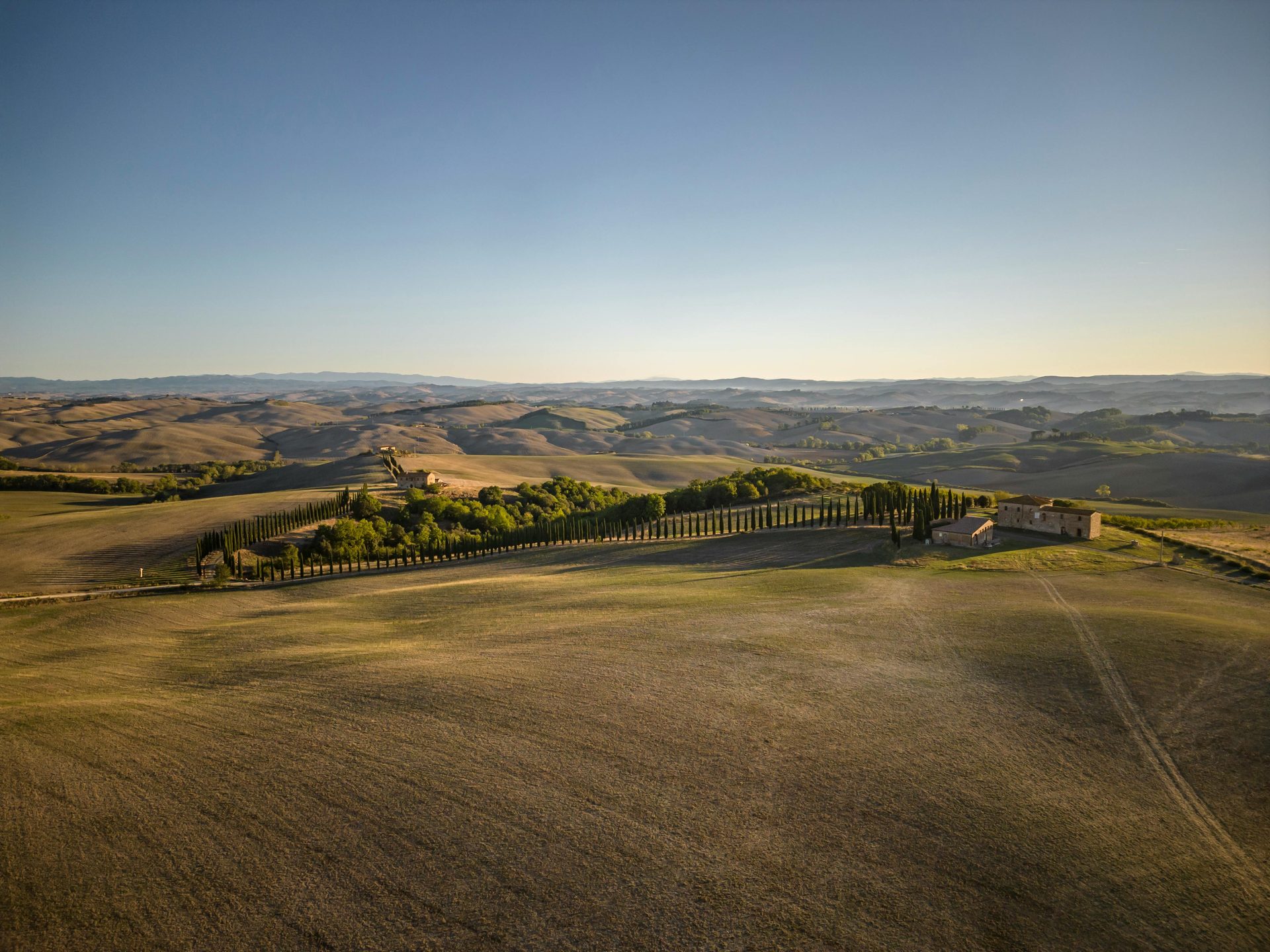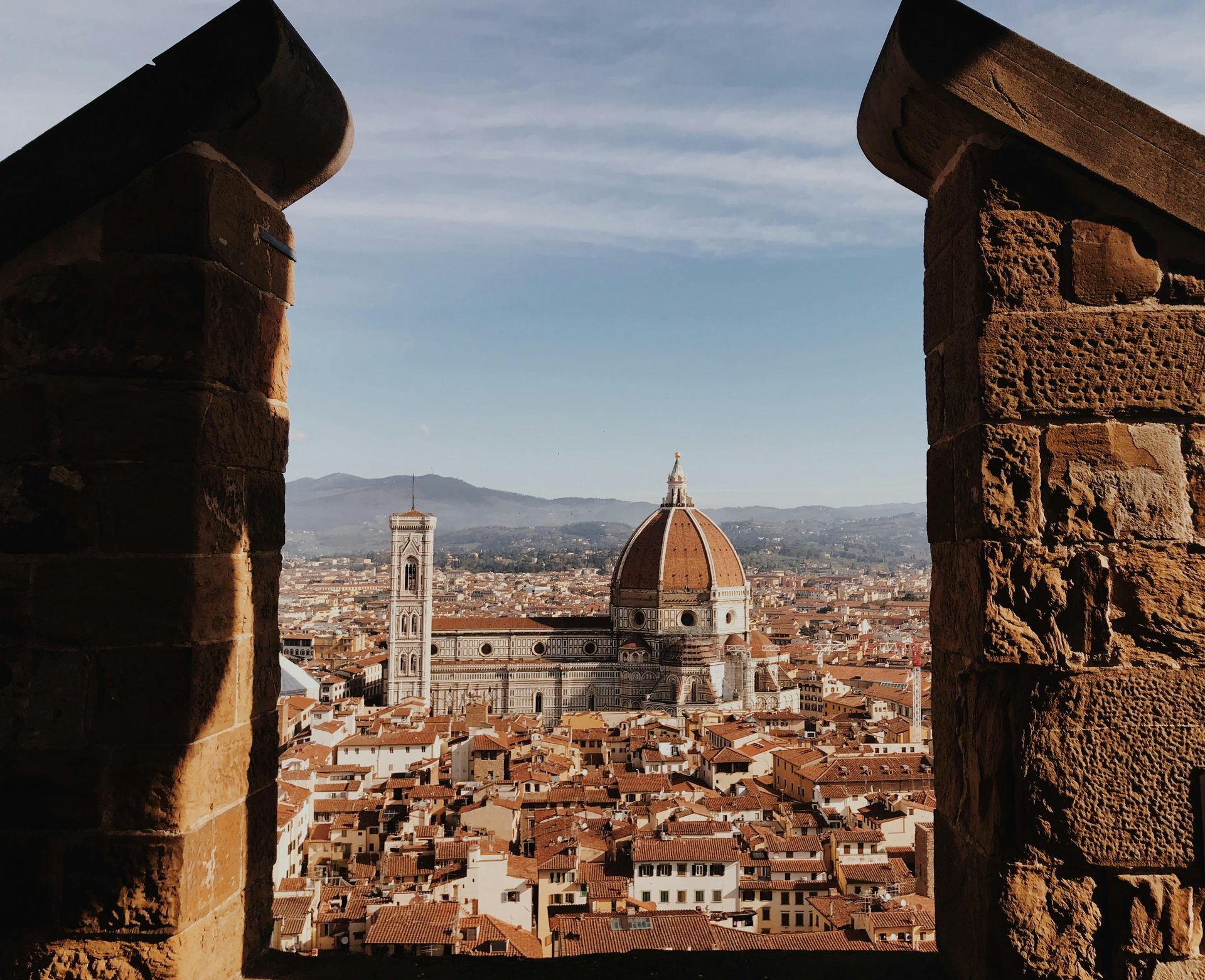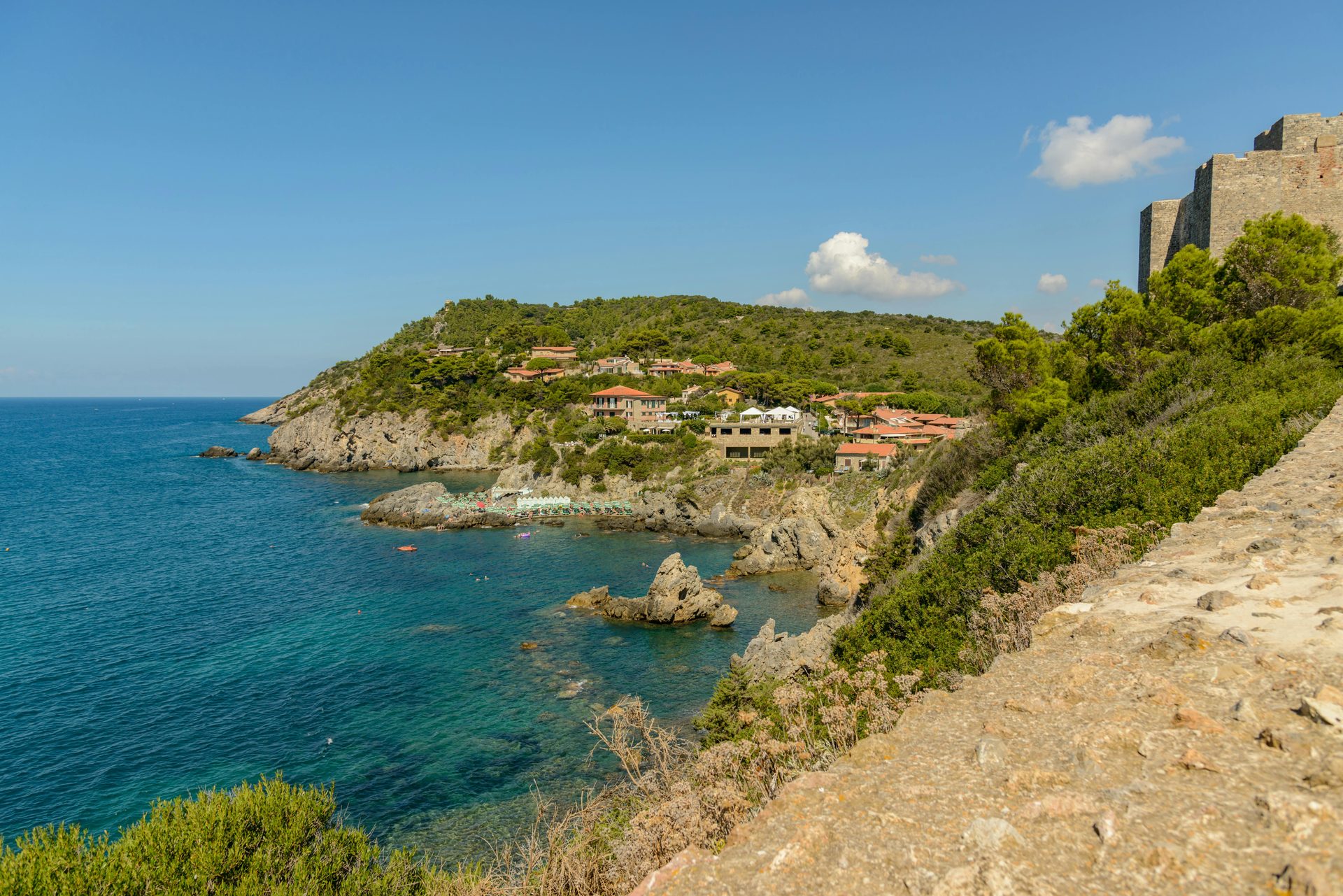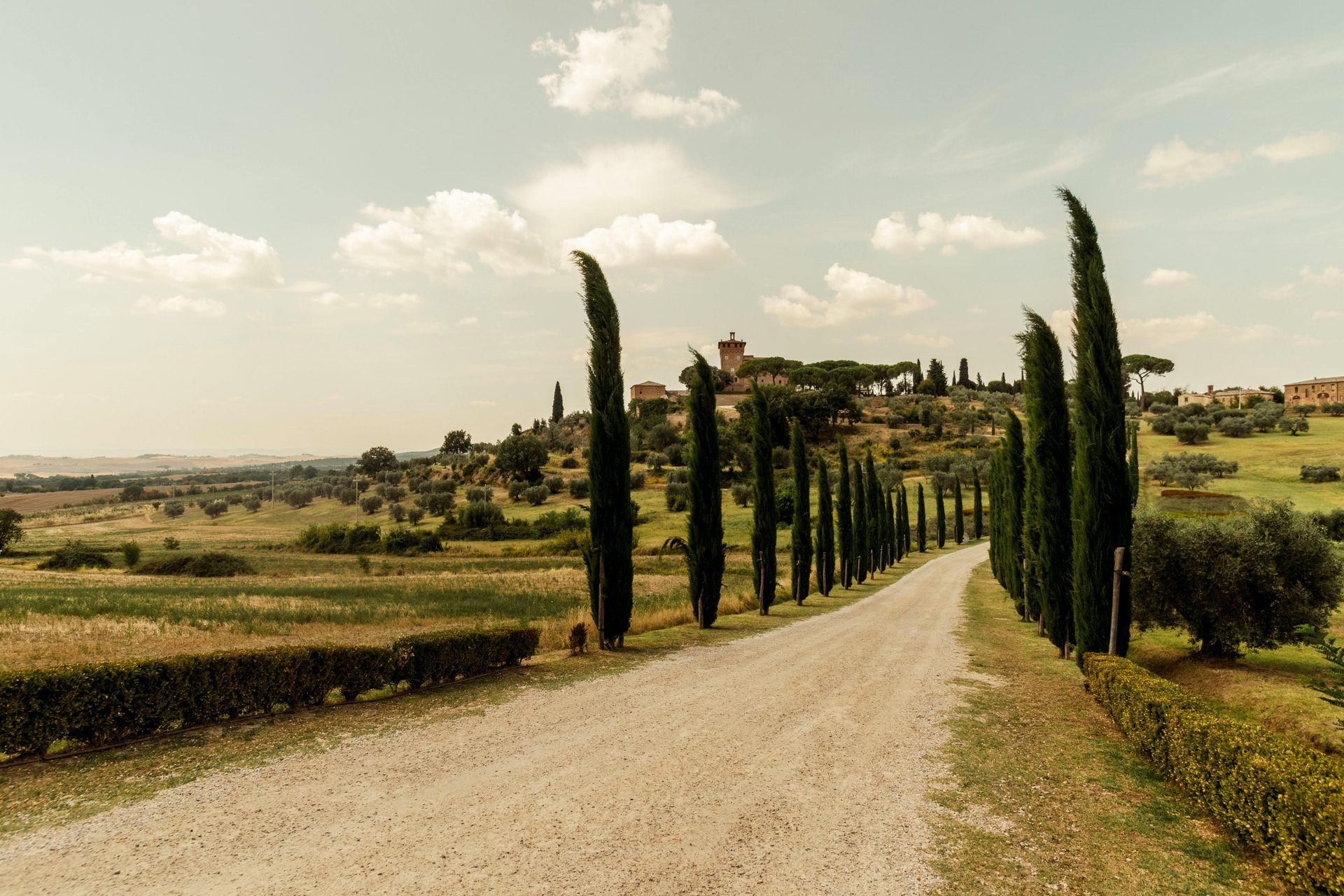
New construction has not been permitted in Chianti Classico for over twenty years, which means the supply is the existing stock, and it shrinks each year as houses fall into disrepair while nothing new replaces them. That single structural fact explains most of what a buyer needs to understand about prices here.
Chianti Classico covers six municipalities between Florence and Siena: Greve, Barberino Tavarnelle, and San Casciano in Val di Pesa on the Florence side; Radda, Castellina, and Gaiole on the Siena side. It is the most-searched Tuscan zone among international buyers. Prices move with municipality, condition, and position, and the spread is wide enough that headline averages tell you very little.
What does a Casale in Chianti Classico cost?
A renovated Casale with pool runs 1.2 to 3.5 million euros. At 300 to 600 m² of living space, that works out to 3,500 to 5,500 EUR/m². An unrenovated Casale costs 400,000 to 1.2 million, or 1,000 to 2,000 EUR/m². The gap between the two is wider here than in other Tuscan zones, because renovation runs 1,500 to 2,500 EUR/m² and landscape protection extends the timeline considerably. Good tradespeople are booked 12 to 18 months out.
The official price tables (OMI, Osservatorio del Mercato Immobiliare) cap at around 3,500 EUR/m² for villas. The luxury segment sits above that, because the OMI scale does not capture panoramic views, a DOCG vineyard, or a pool. What a specific house is worth cannot be read off the table alone, which is precisely the point at which a local valuation matters.
One pattern holds across recent closings: the per-square-metre price falls as size rises, because the buyer pool gets smaller. A renovated 700 m² Casale on two hectares sits at a different price point than a villa with parkland on 40 hectares, even in a comparable location. There is room to negotiate, but it varies by property, and houses that have sat longest tend to sell first. When and how to negotiate is something I work through with each buyer individually. More on the buyer advisory service.
Who buys in Chianti?
| Origin | Typical segment | Budget | Trend |
|---|---|---|---|
| Germany / Austria / Switzerland | Casale, second home | 1-3 million | Declining |
| USA | Villa / Tenuta | 2-5 million | Growing |
| UK | Casale / Villa | 1-3 million | Growing |
| Benelux / France | Casale | 800k-2 million | Stable |
Buyers from Germany, Austria, and Switzerland have come to Chianti for decades: typically a couple in their mid-50s after a Casale with pool, on site four to eight weeks a year. Their share is easing as eurozone rates stay high, US and UK demand strengthens, and younger buyers look to Portugal and Greece instead.
US buyers carry the highest budgets and want larger properties. The US is the strongest non-European source market, and many plan an income use alongside living there, a small winery or an agriturismo. UK demand is growing fastest of all. Since 2023, more enquiries reach me from London and New York than from Munich and Vienna. International demand sets the price ceiling in this zone.
How the municipalities compare on price
The six municipalities split into a Florence side and a Siena side, and the price spread between them is real. Greve and San Casciano sit closer to Florence and to everyday infrastructure; Radda, Gaiole, and Castellina sit deeper in the hills and trade quiet for distance.
Greve in Chianti (13,800 residents) is the largest town and the practical gateway from Florence, with supermarkets, a pharmacy, doctors, and a primary school. Greve itself runs 3,000 to 4,000 EUR/m². The hamlet of Panzano to the south is among the most expensive addresses in the zone: about 30 minutes from Florence, in the DOCG core, with views in nearly every direction. Renovated Casali with views there start at 4,000 EUR/m² and reach 5,500 in the best positions.
Castellina in Chianti (2,900 residents) sits midway to Siena (25 minutes) with good access on the SR222. Prices run a wide 3,500 to 5,000 EUR/m². Radda in Chianti (1,600 residents) is smaller, more remote, and carries weight among wine buyers; prices are comparable to Castellina, but the selection is thinner. Gaiole in Chianti (2,800 residents) sits somewhat below both and is drawing more US and UK enquiries than the rest of the Siena side combined since 2024.
Barberino Tavarnelle (12,100 residents) offers the strongest price-to-quality ratio of the zone, with A1 motorway access and prices noticeably below Greve and Castellina at comparable quality. San Casciano in Val di Pesa (16,800 residents) is closest to Florence (20 minutes) and has the best infrastructure of any Chianti municipality, which suits buyers who need the airport, schools, and clinics regularly and accept a less rural setting. Which town fits which buyer turns on more than price, and is best worked out directly.
Getting there and living with the distances
| From | Florence centre | Siena | Florence airport (FLR) | Pisa airport (PSA) | Motorway A1 | Hospital |
|---|---|---|---|---|---|---|
| Greve | 40 | 50 | 45 | 90 | 25 (Incisa) | 40 (Careggi, FI) |
| Panzano | 50 | 40 | 55 | 85 | 30 | 45 (Careggi, FI) |
| Castellina | 55 | 25 | 60 | 80 | 35 (Poggibonsi) | 25 (Le Scotte, SI) |
| Radda | 55 | 35 | 60 | 90 | 35 | 35 (Le Scotte, SI) |
| Gaiole | 65 | 30 | 70 | 95 | 40 | 30 (Le Scotte, SI) |
| Barberino T. | 40 | 35 | 45 | 75 | 15 (A1) | 35 (Poggibonsi) |
| San Casciano | 20 | 50 | 25 | 80 | 10 (A1) | 25 (Careggi, FI) |
Chianti needs a car. Florence airport has direct flights to Munich, Vienna, Zurich, Frankfurt, Paris, and London, and sits 45 to 70 minutes from most of the zone; Pisa is larger but 75 to 95 minutes out. By train, the Frecciarossa reaches Florence, then 50 to 70 minutes by road into the hills. Many buyers drive down from across Europe and use the house for extended weekends.
Fibre reaches the centres of Greve, Barberino, and San Casciano at 100-plus Mbit; out in the countryside, three to five kilometres from town, speeds drop to 20 to 50 Mbit, so anyone working remotely should check the specific address before buying. Italian carries daily life: English works in restaurants and wineries, far less with tradespeople, the municipality, or the doctor. A buyer on site six to eight weeks a year needs someone local who can handle authorities and coordinate the garden, pool, and winter checks; a caretaker runs 300 to 600 euros a month. Some buyers rent out in their absence, others do not. Both work, but the decision affects the tax position. More in the rental guide. The nearest international school and foreign-language specialists are in Florence, about 45 minutes from Greve.
Prices by property type
| Type | Typical size | Price range | EUR/m² |
|---|---|---|---|
| Casale (renovated, pool) | 300-600 m² | 1.2-3.5 million | 3,500-5,500 |
| Casale (unrenovated) | 300-800 m² | 400k-1.2 million | 1,000-2,000 |
| Villa | 500-1,000 m² | 2.5-7.5 million | 2,800-5,000 |
| Tenuta (with production) | 500-5,500 m² + 15-130 ha | 3.5-11 million+ | Blended calculation |
| Podere (small, little land) | 150-300 m² | 500k-1.5 million | 2,500-4,000 |
| Borgo (hamlet) | 1,000-2,500 m² | 2.5-5 million+ | 2,000-3,000 |
The Casale is the most common property here: a former farmhouse in natural stone, two to three storeys, with outbuildings and some land. Renovated Casali with pool are the most-searched category among German-speaking and British buyers. Unrenovated ones cost a third to half as much, with renovation taking 12 to 24 months. Buyers who renovate themselves often come in below the price of a comparable finished house, but they need time and an architect who knows the heritage-approval process. Whether that works out cheaper than a finished property is a figure I work out before any offer. For a detailed look at renovation costs, permit tiers, and what a surveyor checks before you commit, see buying a casale in Tuscany.
A Tenuta with wine production is priced on hectares, harvest volume, and the DOCG licence, not on residential square metres. A Borgo is an entire small settlement of four to eight buildings, often run as an agriturismo or boutique hotel, at 2,000 to 3,000 EUR/m² because renovation is heavy and commercialisation takes years. In both cases you are buying a business, not a house.
What drives Chianti prices up and down
Three factors lift a price noticeably. Panoramic views over hills and vineyards carry their own value in a landscape like this. A productive DOCG vineyard or olive grove is valued separately and adds significantly to an estate; Chianti Classico vineyard land ranks among the most sought-after in Italy. An existing permitted pool commands a premium, because the buyer skips a four-to-eight-month approval process through the municipality and heritage authority.
Three factors pull a price down. Access only by gravel road (Strada bianca) appeals to some buyers but reads to the market as a negotiation point. Listed-building status, where every window change needs heritage approval, pushes restoration costs well above those of a standard Casale. And cadastral discrepancies, the gap between official plans and the building as it stands, affect nearly every older house; clearing them runs from 1,000 to 5,000 euros for paperwork corrections to 20,000 euros and more where volume was added, and takes months. A house with views and a permitted pool on a paved road is a different asset than the same square metres on a gravel track facing north. These factors are checked before a first offer. See current listings.
When to view and when to negotiate
The Chianti market runs on a clear annual rhythm. Most new listings reach the market from February to April, after winter, photographed in the first spring light; March has the highest density of new listings. April to June brings the first viewing wave, with the landscape at its greenest. Through July and August, buyers in the area on holiday let decisions mature, though sellers are harder to reach.
September and October bring a second wave during the grape harvest (vendemmia), when the villages come alive and viewings often lead to decisions within weeks.
The quiet months from November to February offer the most room to negotiate: fewer listings, less competition, and a stronger hand for the buyer. One winter viewing is worth it even after a spring visit. At four degrees you see the house without the summer filter, the heating gets tested, and the access road shows what it does in the rain. Properties that have sat since spring tend to move in November: the seller is ready, the competition has gone, and the buyer who has done the groundwork can negotiate from a position of knowledge rather than urgency. A common sequence runs from a first conversation in spring to an offer in late autumn on a property that had drawn no bid since spring, with about a year from first call to keys. Timing turns on the property and on your own situation. Get in touch.
What landscape protection means for the buyer
The whole of Chianti Classico sits under landscape protection (Vincolo paesaggistico), so every exterior change needs heritage-authority approval: window sizes, facade colours, roofing materials, extensions, pergolas, solar panels. The process takes three to six months. Rooftop solar is usually refused; ground-level installations in the garden are sometimes approved. Interior work without structural changes goes through a lighter municipal filing.
On agricultural land in the DOCG zone, a neighbouring farmer holds a right of pre-emption, which adds 30 to 60 days to a purchase that includes vineyard or olive grove, since the entitled parties must be formally notified. The practical effect for buyers is a longer approval path on renovations. The structural effect is the opposite: no neighbour builds a warehouse on the adjacent plot, the view stays as it is, and the stock of habitable Casali keeps shrinking against steady demand. Regulation holds that value in place — not a guarantee of future gains.
More on the full purchase process in the Italy buying guide. For where Chianti sits among the other zones, see where to buy in Tuscany and the 2026 market overview.
FAQ: buying property in Chianti
What does a renovated Casale in Chianti Classico cost?
Between 1.2 and 3.5 million euros, which works out to 3,500 to 5,500 EUR/m². Panzano and Castellina sit at the top end, Gaiole and Barberino Tavarnelle at the lower end. The per-square-metre figure falls as the house gets larger, because fewer buyers compete for the biggest properties.
How much negotiation room is there in Chianti?
It depends on the property. Houses listed for a long time carry the most room, and the quiet months from November to February give a buyer the strongest position. Freshly renovated houses with views and a permitted pool draw competing interest; room there is limited. When and how to negotiate is something I work through with each buyer.
Do I need a permit to renovate in Chianti?
Yes. The whole zone sits under landscape protection, so exterior changes need heritage-authority approval, three to six months as a rule. A pool needs both the municipality and the heritage authority, four to eight months. Interior work without structural changes goes through a lighter municipal filing. Bring in the surveyor and architect before the purchase. More in the renovation guide.
Can a non-Italian buy a house in Chianti?
Yes, with no restrictions in practice. EU citizens buy freely, Swiss buyers under a reciprocity arrangement that raises no issue, and US and UK buyers face no threshold. The purchase process from offer through the preliminary contract (compromesso) to completion at the notary typically takes three to six months. Where the property includes agricultural land, the farmer’s right of first refusal adds 30 to 60 days. More in the Italy buying guide.
What is the most common mistake buyers make in Chianti?
Signing the preliminary contract before the building’s compliance is checked. Nearly every older house here has discrepancies between the official plans and what stands on the ground. A surveyor’s check costs 2,000 to 5,000 euros; the regularisation that may follow runs from a few thousand euros for minor discrepancies to 20,000 and more for major ones. This is verified before you commit. More in the buyer mistakes guide.
What additional costs come on top of the purchase price?
Plan on ten to fifteen per cent above the purchase price. The largest single item for buyers without primary-residence status is the property transfer tax at 9 per cent of the official cadastral value. On top of that come notary fees, a surveyor for the technical check (2,000 to 5,000 euros), and the agent’s commission of 4 per cent plus VAT, paid by each side separately. Buyers who establish fiscal residence in Italy may also be able to apply for the flat-tax regime of 300,000 euros per year on foreign-source income, valid for up to 15 years. The full breakdown for a specific purchase is in the Italy tax guide.
Andrej Avi is an estate agent in Tuscany who guides international buyers from the first call to completion. Buying guidance · Properties · About Andrej
As of July 2026. General information, not legal or tax advice.