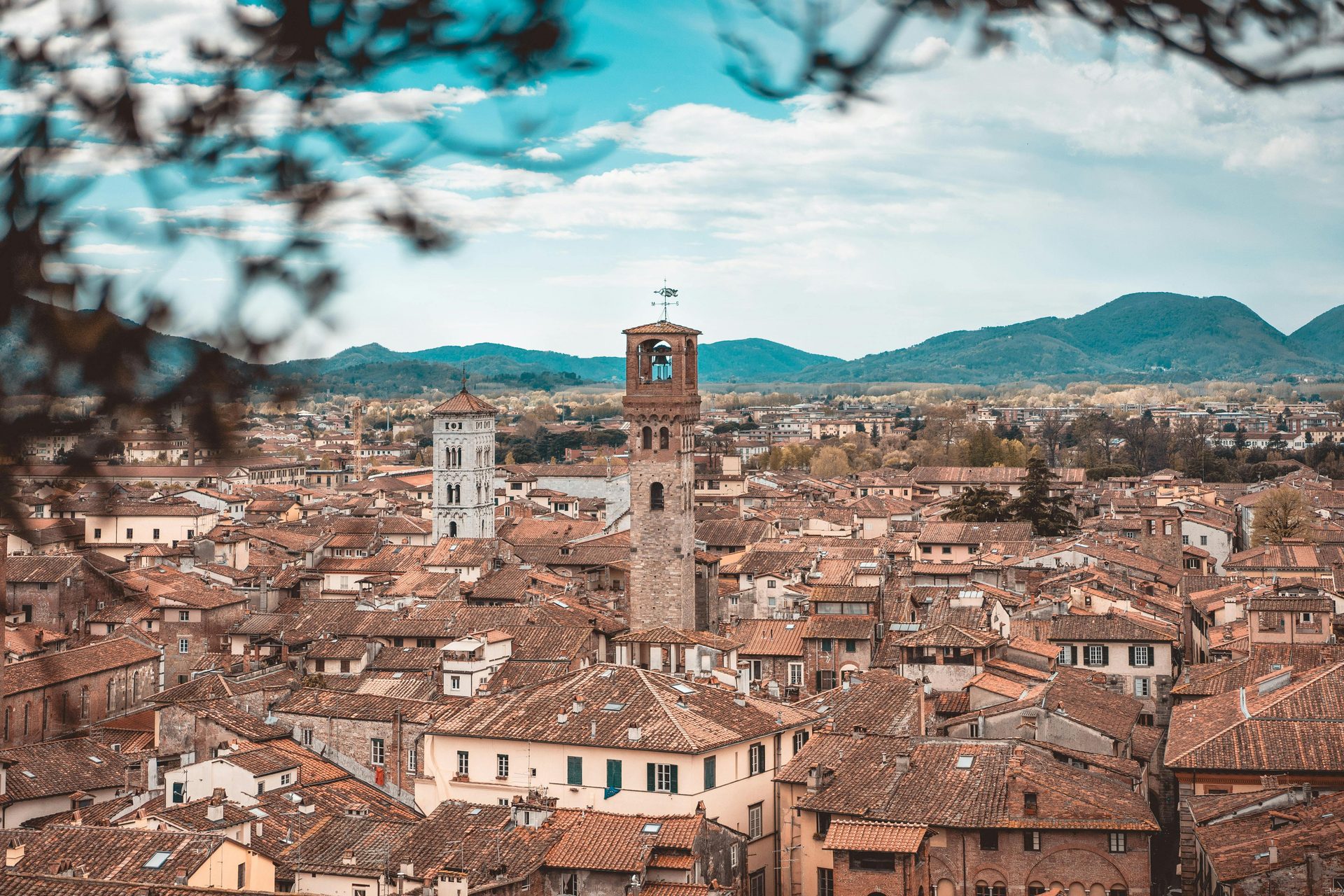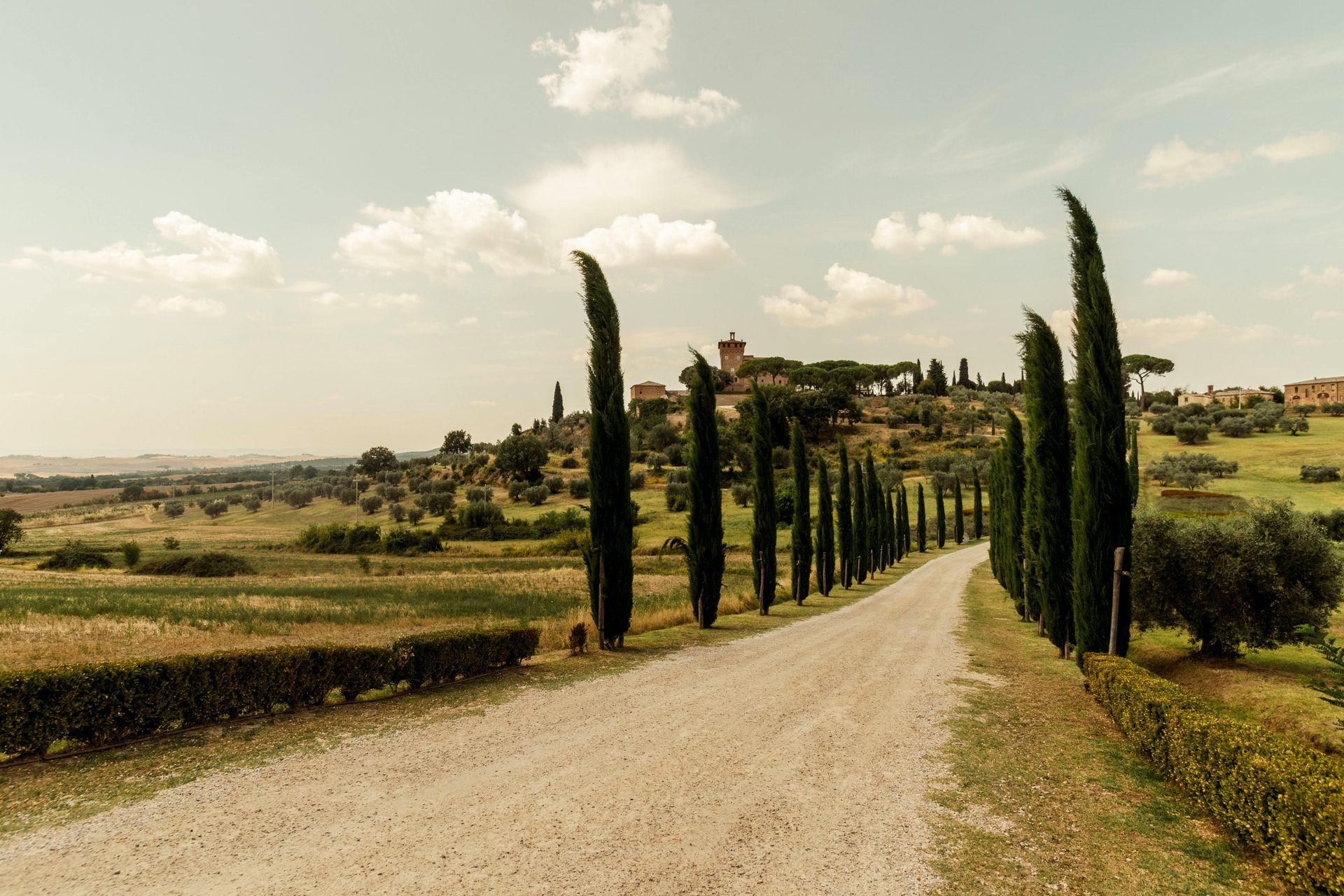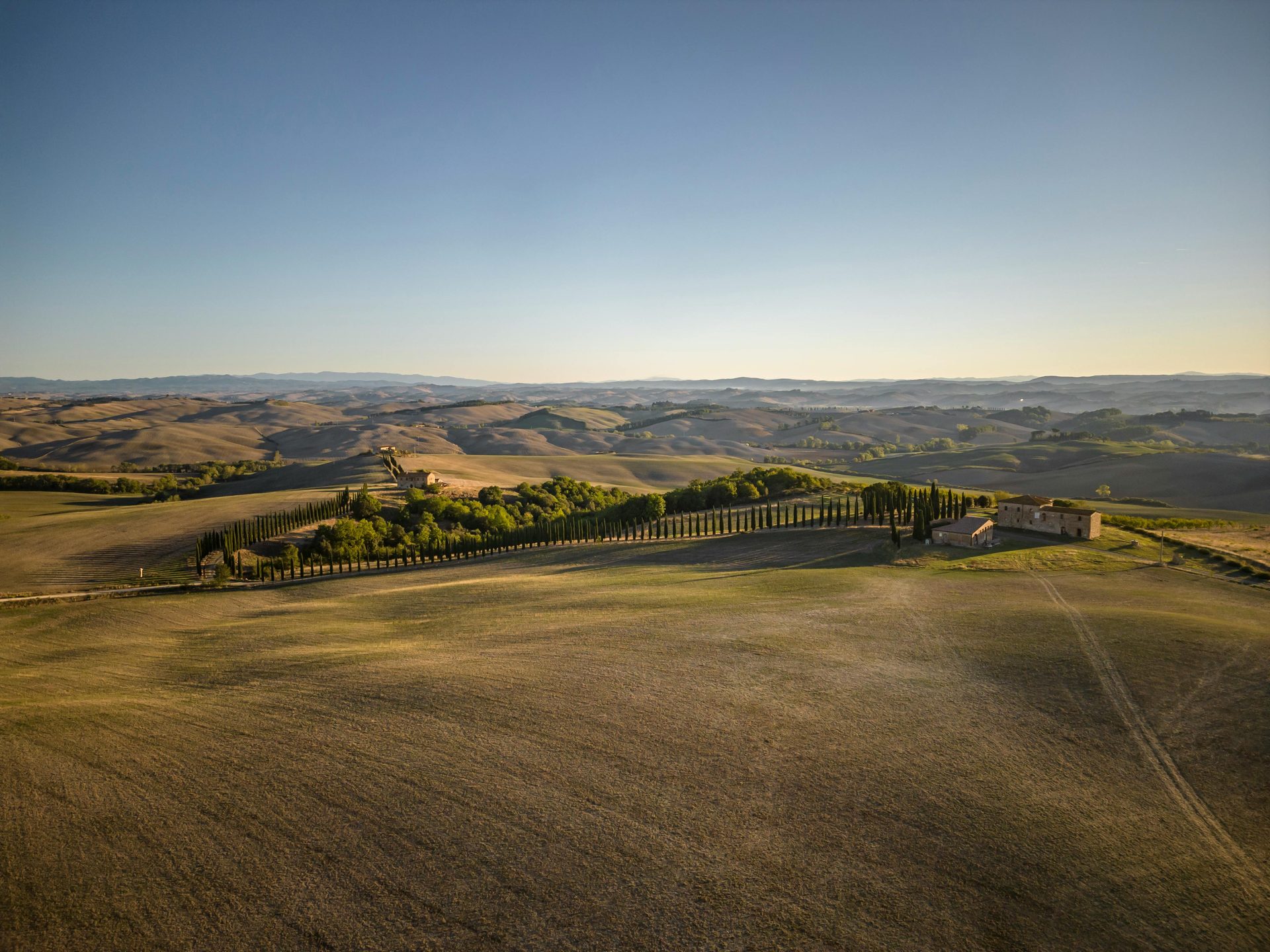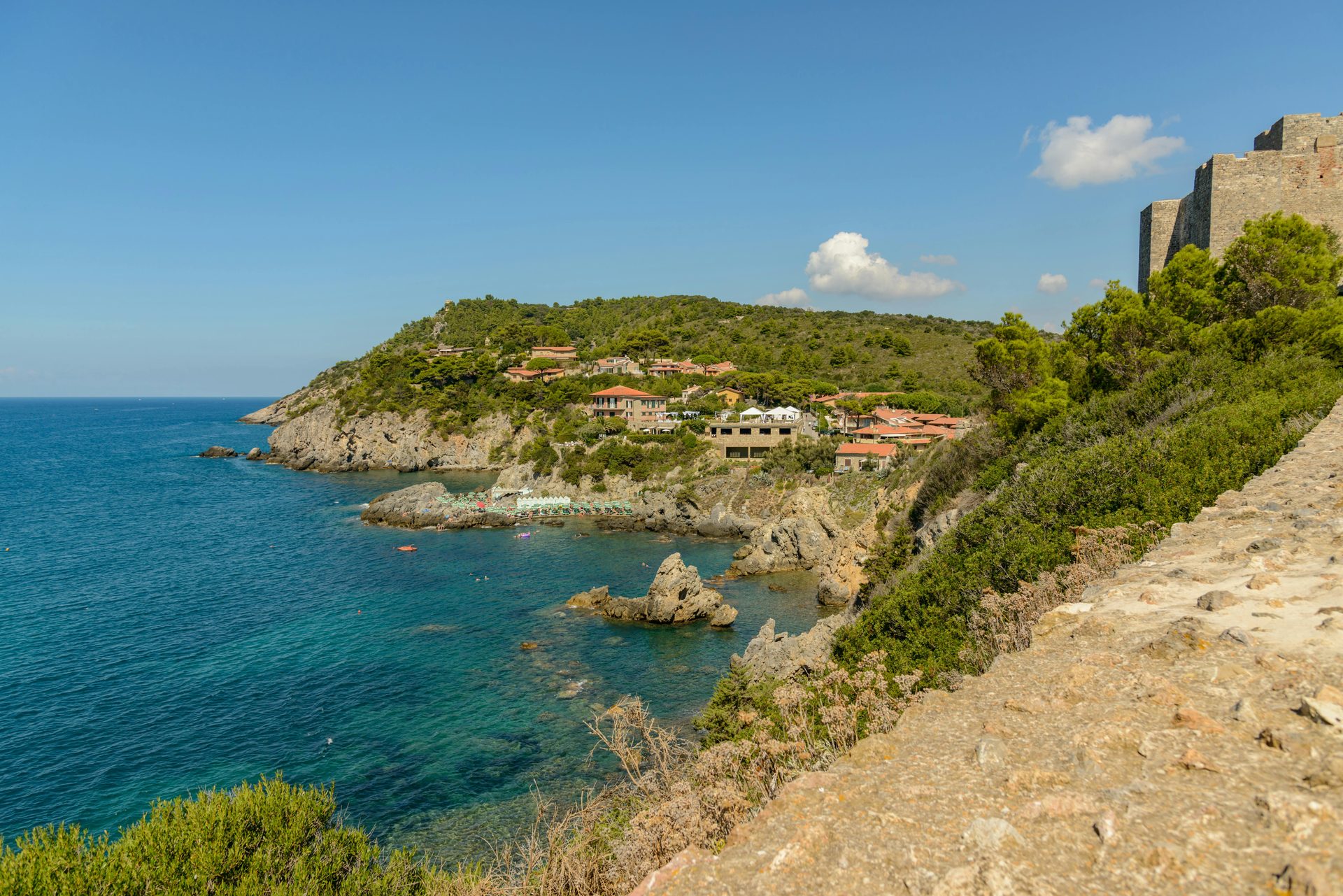
The Maremma is two markets in one province, separated by 30 to 45 minutes of driving. Along the coast, premium locations on Argentario and Punta Ala reach 11,500 to 18,000 EUR/m². Inland, prices start at 1,165 EUR/m² in Pitigliano and rarely top 3,500. A buyer’s first decision here is not which house but which of the two worlds: sea or hills.
The province of Grosseto covers 4,500 square kilometres between the Tyrrhenian Sea and the Monte Amiata hills, the least densely populated in Tuscany. Buyers get more building and more land per euro here than in Chianti or the Val d’Orcia, and the landscape is rougher, less curated, which draws a particular type of buyer. Enquiries from Germany, Austria, and Switzerland are rising, and inland prices in several municipalities now sit below 2024 levels.
What the Maremma is, and who it suits
Until the mid-twentieth century, the Maremma was marshland. Drainage works in the 1930s transformed it into agricultural territory. Today it shows as a mixture: wild coastline to the west (the Parco Regionale della Maremma, Monte Argentario), gentle hills inland (Scansano, Pitigliano, Massa Marittima), thermal springs at Saturnia. Population density is low. The landscape reads rougher, less manicured than Chianti.
The province holds the highest agriturismo density in Tuscany. Morellino di Scansano DOCG is the local red appellation, far less known than Chianti Classico and considerably cheaper for a vineyard entry. Maremma DOC olive oil is building a quiet reputation among specialists.
Protection shapes supply at both ends. The Parco Regionale along the coast between Principina a Mare and Talamone bars new construction in its buffer zone, anchored in Tuscany’s regional landscape plan. That limits the stock and steadies value, the same mechanism a buyer sees in Chianti or the Val d’Orcia, applied to a wilder coast.
What does property cost in the Maremma?
Prices split into two worlds. On the coast, premium locations on Argentario and Punta Ala reach 11,500 to 18,000 EUR/m²; inland, they start at 1,165 in Pitigliano and rarely pass 3,500. The official price tables (OMI) frame the inland market closely, but the coastal luxury segment sits well above them, because the scale does not capture sea views or a position on the point.
The coast absorbs capital; the inland offers space. A villa on Argentario sits in the double-digit-thousand per-square-metre range of the top locations, while a podere in the Pitigliano hinterland changes hands for a fraction of that. Negotiation room runs the other way from price: tighter on the coast where demand holds, wider inland where Scansano and Pitigliano record falling values, and widest on anything listed beyond twelve months. More on the buying process.
The coast: Argentario, Castiglione, Punta Ala, Capalbio
The coastal municipalities form their own price category, set by sea access and a buyer pool that reaches from Rome to international wealth.
| Municipality | EUR/m² range | Segment | Trend |
|---|---|---|---|
| Monte Argentario | 3,350-5,750 (peaks 11,500-18,000) | Ultra-luxury, sea-view villas | stable to rising |
| Castiglione della Pescaia | 3,765-4,720 | Premium coast, well above Tuscan average | rising |
| Punta Ala | 4,000-6,000 | Marina, golf, gated community | stable |
| Capalbio | 3,845-4,440 | Casali up to 4,440 | stable |
| Orbetello | ~3,240 | Lagoon, apartments dominate | stable |
Monte Argentario is a peninsula tied to the mainland by three sand strips, with two harbours: Porto Ercole, which has drawn wealthy Romans for centuries, and Porto Santo Stefano, with the busier yacht marina. A coastal villa of 600 to 650 m² costs 5.8 to 6.9 million euros. The market here works differently from the rest of the Maremma: low turnover, long holding periods, and sales that happen almost entirely through personal networks, with properties often never publicly listed. A buyer who wants in needs access more than a budget.
Castiglione della Pescaia shows the strongest price growth in the region and sits well above the Tuscan average. It suits a buyer who wants a coastal address with village character, livelier year-round than Argentario, with a repeatedly Blue Flag-awarded beach and a compact centre that stays open through winter. Punta Ala, between Castiglione and Follonica, is a planned resort community with a marina and golf course, the logical choice for a buyer who prioritises a boat berth and short walks to the beach.
Capalbio borders Lazio, and casali in the hills behind the town reach 4,440 EUR/m². Among Roman buyers it carries the reputation of a “little Forte dei Marmi” and a stronger Italian character than the other coastal towns. Orbetello sits on a causeway in the lagoon and is an apartment market more than a villa one, around 3,240 EUR/m², the practical base near Argentario for a buyer not paying villa prices.
The hinterland: Scansano, Pitigliano, Saturnia, Grosseto
The interior is a different market, well below the coast, with several municipalities falling for two years. For a patient buyer willing to negotiate, it is the more interesting half of the province.
| Municipality | EUR/m² range | Feature | Trend |
|---|---|---|---|
| Scansano | ~1,570 (casali ~2,205) | Morellino DOCG, wine zone | declining |
| Massa Marittima | 1,300-1,800 | Medieval core, mining heritage | stable |
| Pitigliano | 1,165-1,300 | "Little Jerusalem", tuff-stone town | declining |
| Saturnia | 1,500-2,000 | Thermal springs, year-round tourism | stable |
| Grosseto (city) | 1,800-2,500 | Provincial capital, infrastructure hub | stable |
Scansano is the centre of the Morellino di Scansano DOCG zone, at 500 metres and 30 minutes from the coast. Prices have fallen, around 1,570 EUR/m² with casali near 2,205, a clear buyer’s market. Pitigliano, the tuff-stone town on a cliff edge known as “Little Jerusalem” for its historic Jewish community, is the cheapest zone here, from 1,165 EUR/m², where a patient buyer holds a strong hand.
Saturnia runs on its year-round thermal springs, so its tourism is less seasonal than the coast, which makes proximity a real location advantage for an agriturismo operator drawing guests outside summer. Grosseto, the provincial capital of 82,000, is not a typical purchase target but matters as the infrastructure anchor: hospital, schools, supermarkets, and a station. A buyer 20 minutes outside the city uses Grosseto for daily life.
Who buys in the Maremma?
Buyer profiles split with the geography. On the coast, the buyers are Italian families after a second home and international wealth, with the largest share from Rome two hours south, and use is seasonal from May through September. Inland, three groups dominate: lifestyle buyers from Germany, Austria, and Switzerland after a holiday or retirement base; agriturismo founders building a hospitality business; and winery investors taking Morellino DOCG as a cheaper entry into Tuscan wine than Chianti Classico or Brunello.
The Maremma is less international than Chianti, with a higher share of Italian buyers from Rome and Lazio. Two things follow: the market tracks the Italian domestic economy more closely, and an international buyer faces less competition from US and UK purchasers than in Chianti — the buyer pool here is more Italian and Roman. For a buyer who finds Chianti too expensive, the Maremma offers comparable landscape quality with more space and less competition for the same budget. More about the approach.
What stands out in the Maremma market now
The coast and the hinterland are moving in opposite directions. Argentario and Punta Ala post clear price gains while Scansano and Pitigliano lose value, and this is structural: low local demand meets growing supply. Agriturismo projects are increasing in step, drawn by the lowest estate entry prices in Tuscany and regional rules that ease the conversion of farm buildings for hospitality and wine tourism. More in the agriturismo guide.
Argentario sits in its own bracket. Its peaks of 11,500 to 18,000 EUR/m² compete with Versilia and Amalfi, but with a different buyer: less fashion and more generational wealth. Porto Ercole has drawn the same type since the Renaissance, wealthy Romans summering by the sea, and properties there often never reach the open market. For how the Maremma sits among the other zones, see where to buy in Tuscany and the 2026 market overview.
Property types in the Maremma
| Type | Typical size | Price range | EUR/m² |
|---|---|---|---|
| Casale (renovated, inland) | 300-600 m² | 600k-2 million | 1,500-3,500 |
| Casale (unrenovated, inland) | 300-800 m² | 200k-700k | 600-1,200 |
| Villa (coast, Argentario) | 300-650 m² | 3-7 million | 5,750-18,000 |
| Tenuta / Agriturismo | 500-1,200 m², 5-150 ha | 1.2-28 million | blended calculation |
| Winery (Morellino DOCG) | cellar + 11-17 ha vineyard | 2-5 million | blended calculation |
| Podere (small, inland) | 150-300 m² | 300-800k | 1,200-2,500 |
The casale is the most common property here too: a former farmhouse in natural stone, two to three storeys, with outbuildings and land. Against Chianti, the Maremma offers larger plots, 5 to 10 hectares rather than 1 to 3, and renovation runs 1,200 to 1,800 EUR/m², slightly below Chianti because tradespeople are more available and the heritage authority less restrictive than in the core DOCG zones. Purchase plus build-out usually lands well under a comparable finished house in Chianti, with the exact figure set by condition and confirmed before any offer is placed.
Coastal villas are their own world. On Argentario they start at 3 million and reach 7 million and above, Mediterranean in style, often with direct sea access or a private jetty, and rarely publicly listed. Estates and agriturismo operations are the investment segment: a typical tenuta has 500 to 1,200 m² of building on 5 to 150 hectares, priced anywhere from 1.2 million for a small operation to 28 million for a large estate. A tenuta is a business, not a house. Wineries in the Morellino zone cost a fraction of Chianti, 2 to 5 million for 11 to 17 hectares of vineyard against 5 to 12 million in Chianti Classico; lower brand recognition means a lower entry and more room to grow. Current listings.
What drives Maremma prices up and down
Three factors lift a price. Sea views or a panoramic hilltop position carry the strongest premium; on Argentario an unobstructed view of the Tyrrhenian lifts the per-square-metre price well above a property set back from the coast, and inland a wide panorama works as it does in Chianti. A productive vineyard or olive grove is valued separately and adds to an estate price. Proximity to Saturnia or the coast raises agriturismo occupancy measurably when the springs or the beach are within 20 minutes.
Three factors pull a price down. Extreme remoteness, the southern Maremma more than two hours from Florence, thins infrastructure and weakens resale. Demographically shrinking towns, Pitigliano among them, lose shops, doctors, and local demand, which depresses values but opens an entry point. Cadastral discrepancies, common across Tuscany, cost between 1,000 and 5,000 euros for minor corrections or 5,000 to 20,000 euros and more for significant deviations, and take months; this is checked before the preliminary contract, not after.
Getting there and the distances that follow
| From | Grosseto | Florence | Rome | FLR airport | FCO airport | PSA airport |
|---|---|---|---|---|---|---|
| Monte Argentario | 50 | 195 | 150 | 200 | 160 | 210 |
| Castiglione d. P. | 25 | 160 | 210 | 165 | 220 | 170 |
| Punta Ala | 40 | 170 | 230 | 175 | 240 | 160 |
| Scansano | 30 | 180 | 170 | 185 | 180 | 200 |
| Pitigliano | 75 | 210 | 150 | 215 | 160 | 230 |
| Saturnia | 60 | 200 | 160 | 205 | 170 | 220 |
| Capalbio | 50 | 200 | 130 | 205 | 140 | 220 |
| Orbetello | 40 | 190 | 150 | 195 | 160 | 210 |
The Maremma sits further from Florence than Chianti: Scansano to Florence is roughly three hours, to Rome about two hours fifty. Argentario and Capalbio are closer to Rome than to Florence, which explains the strong Roman presence on the southern coast. Flying in, Rome Fiumicino has the most direct links from London, Munich, Vienna, Zurich, and Frankfurt and reaches the southern Maremma in about two hours; Florence suits the northern hinterland, Pisa the northern coast. Grosseto’s station runs to Rome in 2.5 hours and Florence in 2. A car is a necessity once you arrive.
Daily life centres on Grosseto, which carries supermarkets, the hospital, and the specialist shops; the hinterland thins to a grocery and a petrol station per town. The cooking is earthier than Chianti’s, wild boar and acquacotta, with a lively fish scene on the coast that mostly closes in winter while the interior keeps serving year-round. Morellino sells for 8 to 15 euros direct from the producer, against twice that for a Chianti Classico Riserva, and a casale with an olive grove covers a household’s 50 to 100 litres of oil a year. Italian carries the area, English only at coastal hotels and restaurants, so a buyer on site needs someone local; a caretaker runs 250 to 500 euros a month, easier to find than in Chianti. Fibre reaches Grosseto and the coast at 100+ Mbit but drops to 20 to 40 inland, where Starlink is a realistic alternative; check the address before buying if you work remotely. Heating a poorly insulated casale costs 4,000 to 7,000 euros a year against 1,200 to 2,500 for class A or B, though the season is shorter and milder than Chianti.
Maremma against Chianti: the price comparison
The comparison is a multiple. A renovated 400 m² casale on three hectares in Chianti Classico near Greve costs 1.8 to 2.5 million euros, or 4,500 to 6,250 EUR/m². The same format in Scansano costs 600,000 to 1.2 million, or 1,500 to 3,000 EUR/m². Land follows the same gap: ten hectares of agricultural land inland costs a fraction of Chianti, which is the calculation that counts for an agriturismo or winery buyer. Chianti has better infrastructure, more restaurants, shorter drives, a denser international network; the Maremma has coastal access and more space. For a different price dynamic further east, see the Val d’Orcia property guide. More on Chianti in the Chianti property guide.
Agriturismo and wine as an investment
The Maremma holds the highest agriturismo density in Tuscany, for structural reasons: abundant land, the lowest entry prices of any zone, and growing tourism. A typical project is an estate of 5 to 10 hectares with 400 to 800 m² of building, purchase price 800,000 to 2 million euros, plus renovation at 1,200 to 1,800 EUR/m² and permits. The realistic timeline from purchase to opening is 18 to 36 months. Many estates run agriturismo, wine, and olive oil together, which spreads income across seasons. Morellino works as an asset class because the vineyard land costs a fraction of Chianti, with lower brand recognition and more room to grow. More on agriturismo projects.
When to view and when to negotiate
The coast is strongly seasonal: Argentario, Castiglione, and Capalbio fill from June through September and quiet by October, so the best negotiation conditions arrive in autumn and winter, once summer emotion fades and sellers turn realistic. The hinterland is moderately busy year-round, and the falling prices in Scansano and Pitigliano are structural, which makes negotiation easier above all on anything listed beyond twelve months.
A first inland trip during the grape harvest in September or October lets the wine country show itself in full activity, in a way no photograph conveys. A second viewing between November and February shows the landscape honestly, sellers open up, and the house gets tested under real conditions: heating, humidity, the winter access road. At least one viewing without the summer filter is worth the trip. Get in touch.
What landscape protection means for the buyer
Protection works at two levels here. The Parco Regionale della Maremma has its own rules: new construction is barred in the core and buffer zones, and renovations need park approval on top of the municipal permit, which adds two to four months. Outside the park, standard Tuscan rules apply, and any exterior change to a protected building (facade, roof, windows, extensions) needs heritage-authority approval, though the hinterland tends to be less restrictive than Chianti Classico or the Val d’Orcia. Pool permits take three to six months.
On agricultural land, a neighbouring farmer holds a right of first refusal (prelazione agraria), which adds 30 to 60 days to a purchase that includes vineyard or olive grove. The practical effect is a longer path on some estate purchases; the structural effect is the same as elsewhere in Tuscany: a protected landscape and a supply that does not grow. The complete buying process is in the Italy buying guide.
FAQ: buying property in the Maremma
What does property cost in the Maremma?
The range runs from 1,165 EUR/m² in Pitigliano in the hinterland to 18,000 at the peak on Argentario. A podere inland starts around 300,000 euros, a villa on Argentario at 3 million. The two figures describe two markets, separated by 30 to 45 minutes of driving, and the right one turns on the choice between sea and hills. More on the buying process.
Is the Maremma cheaper than Chianti?
In the hinterland, clearly. A renovated casale format that runs 1.8 to 2.5 million near Greve costs 600,000 to 1.2 million in Scansano. On the coast, Argentario, Castiglione, and Punta Ala match or exceed Chianti levels. The price advantage is an inland story.
Why are prices falling in Scansano and Pitigliano?
Low local demand meets growing supply, and demographics weigh on it; Pitigliano is losing residents, which thins shops, doctors, and local buyers. The fall is structural rather than seasonal, which is what makes it a favourable entry point for a patient buyer willing to negotiate.
Is an agriturismo in the Maremma a good investment?
The province has the highest agriturismo density in Tuscany, and entry prices for a suitable estate of 5 to 10 hectares run 800,000 to 2 million euros, below other zones. Permits and renovation take 18 to 36 months. What it earns is best checked against real booking figures before purchase, and the common pairing of agriturismo, wine, and olive oil spreads income across seasons.
What is Morellino di Scansano?
A Sangiovese-based red appellation grown in the hills around Scansano. The vineyard land costs a fraction of Chianti Classico: a winery with 11 to 17 hectares runs 2 to 5 million euros here against 5 to 12 million in Chianti. Lower brand recognition means a lower entry price and more room to grow, which is why it draws winery investors as a cheaper way into Tuscan wine.
How does the buying process work in the Maremma?
The purchase follows the same three steps as anywhere in Italy: a written offer (proposta d’acquisto), a preliminary contract (compromesso), then completion at the notary (rogito). Where the property includes agricultural land, the farmer’s right of first refusal adds 30 to 60 days, and inside the regional park, renovations need park approval on top of the municipal permit. Details on the buying process page.
What are the purchase costs in the Maremma?
Total acquisition costs typically run 10 to 15 per cent of the purchase price. The largest single item is the registration tax: 9 per cent on the cadastral value for a buyer without a primary-residence benefit, and the cadastral value on rural properties usually sits below the agreed price. Add notary fees, the agent’s commission (4 per cent plus VAT per side), and any translation costs. The full breakdown is in the Italian property tax guide.
How seasonal is the coastal market?
Very. The coastal towns, Argentario, Castiglione, Capalbio, and Punta Ala, are active from June through September. Viewings and negotiation in autumn and winter consistently deliver better conditions.
Where can I see current listings in the Maremma?
Current properties are on the listings page. The complete purchase process for Italy is in the buying guide.
Andrej Avi is an estate agent in Tuscany who guides international buyers from the first call to the notary appointment. Buying guidance · Properties · About Andrej
As of July 2026. General information, not legal or tax advice.